100 years from now, in order to explain how people interacted with and navigated early web, journalists will write about an interface called ‘Google’ in the past tense.
Google came to prominence relatively early on in the history of the internet, late 1998/9 early 2000, in a digital landscape when users searching for a product or service used to turn to search engines such as Yahoo, Dogpile, or AskJeeves to find suitable resources. These early SE’s were like traditional classified directories, such as the yellow pages, but sorted results by relevance to input, rather than alphabetically.
Google quickly became market leaders due to their sophisticated algorithm, driven primarily by one innovation; the patented ‘PageRank’ at the heart of Google’s algorithm.
Through the years, as Google’s tech stack became more sophisticated, it improved its understanding of users’ questions. Users’ behaviour in turn evolved; requests became longer and more like natural language.
In response to more complicated queries, instead of returning a set of documents, Google was able to lift entire sentences or paragraphs it perceived as most accurately fulfilling the question, placing the result directly below it’s search box, above listed documents.
These ‘featured snippets’ became known as Answer Boxes, a feature of Google’s results page which evolved to other text prompts scraped from the web, ‘People Also Asked’.
The Answer Box, due it’s prominent placement above the top of the organic results, became known informally as ‘position 0’.
The Answer Box implementation was challenged and heavily criticised by publishers who paid to produce the content Google was scraping and very often serving paid advertising alongside. Google maintained that Answer Boxes were typically only served against non commercial queries, and with only a sentence or two of the copy reproduced, so as to act as an incentive for the Click. There is conflicting data about whether occupying position 0 increases click through for that particular term, or decreases the overall organic click ecosystem, but certainly Google’s share price continued to rise as publishers were sold or downsized and turned into affiliate networks or the private PR arm of tech giants.
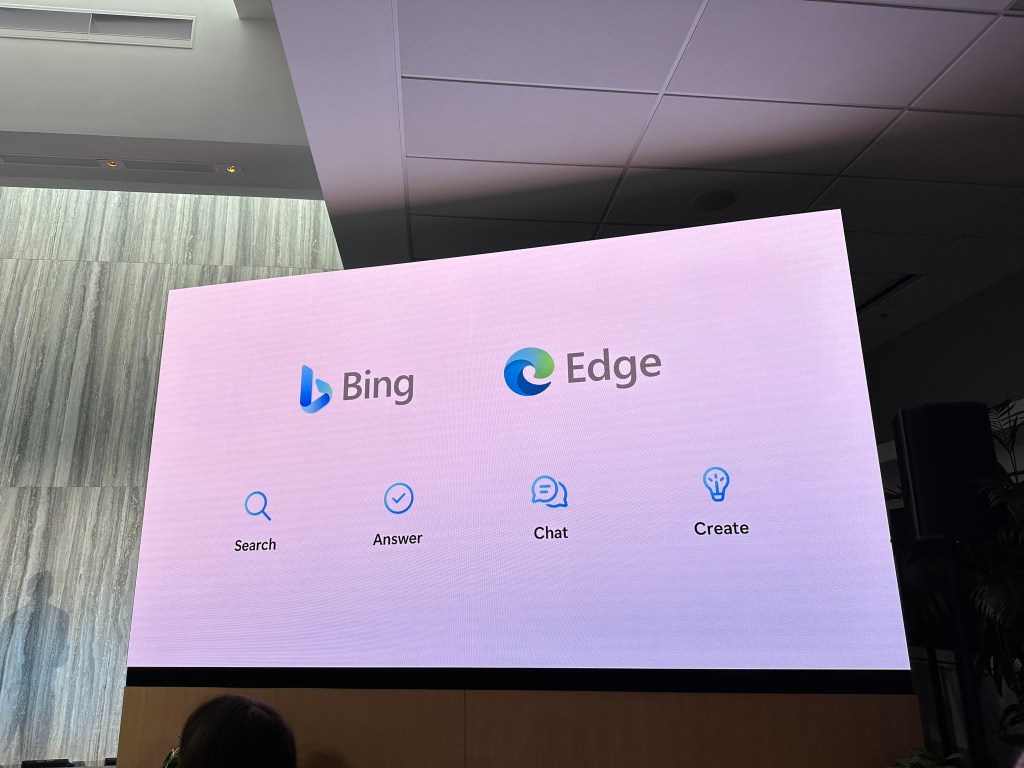
Today Microsoft held an invite only press conference at its HQ in Seattle to announce an important integration into Bing: GPTchat. This comes hot on the heels of Google posting 2% year on year decline for its core product, Search ads, while scrambling a press conference of its own a day earlier then Microsoft to try and pre-empt the GPTchat announcement with its own ‘Bard’ AI chatbot clone.
The panicked noises coming from big G’s Palo Alto fortress is palpable, new, and quite frankly exhilarating to witness.
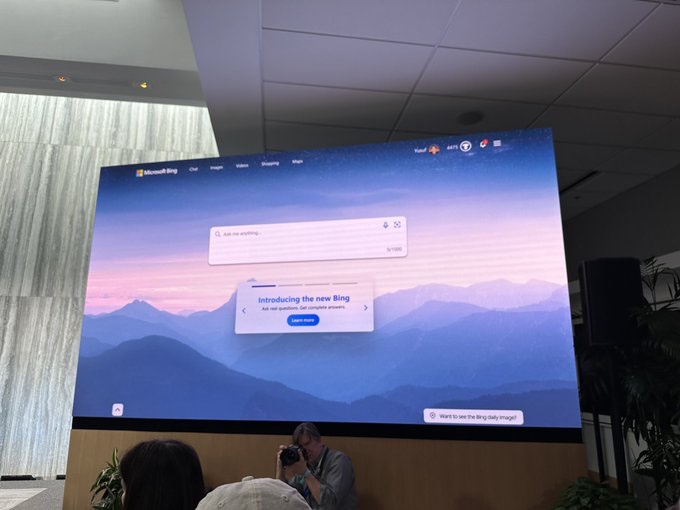
GPTchat – The Future of Search & the threat to G’s monopoly
GPTchat poses the most significant threat to the Search giant’s monopoly in the 20 or so years since Google’s IPO, and its existence heralds a new evolution of Search behaviour.
GPTchat’s answer box function returns answers directly to user’s questions in a similar style to Answer Boxes, but in more detail, much broader in capability, natural-sounding and with creative scope.
The main difference between GPTchat and Google’s Answer Boxes, and how either serve a response to users’ questions, is that GPTchat doesn’t scrape its answer from another source. It’s response is reproduced, created even, from information it has already ‘learned’.
Whereas Google crawls and indexes the entirety of the internet’s publicly hosted content, returning the most relevant sources against user requests, Open AI’s machine learning technology has consumed a large section of, if not all, the web database up to 2021, training itself on freely available source material.
Having ‘learned’ this information it can now regurgitate responses to questions without citation, or more importantly for the publishing industry, recompense.
Microsoft’s $10B investment indicates that somewhere along the way GPTchat will be expected to make a return on this cash stake (reports suggest each query costs 1-2 cents in computing power, which Microsoft won’t be able to fund indefinitely). For now the free version exits, which in turn affords further testing and training opportunity for its ML tech, but with the announcement that GPTchat will be integrated into Bing, we can expect it to start paying for itself through paid advertising.
This might take the form of PLA style insertions directly against relevant keyword requests. Perhaps Microsoft might start including sponsored links in ‘Chat’ sections, where advertisers bid on keywords in answers.
Maybe positive sentiment could be ‘bought’; and a multiplier between 0-1 depending on budget is applied to the sentiment value of any brand mentions.
I asked GPT chat about the future of its paid advertising business, and it has this to say;
“…as GPT-3 becomes more widely adopted, it’s possible that OpenAI may explore different monetization strategies, including advertising.
For example, advertisers could potentially use GPT-3 to generate content, product descriptions, and other online materials more quickly and efficiently, or to target advertisements based on a user’s conversational history.”
The Bing-AI chatbot alliance could very well bring seismic shifts in the balance of search engine market share, away from G in Microsoft’s favour.
It also puts further pressure on a dwindling publishing industry already so reliant on advatorials and affiliate listings it will no longer be able to claim anything close to unbiased, uncensored journalism. If Cnet is anything to go by, the future journalists of the world will all be GPTChat clones anyway.
Can you even be sure this entire article wasn’t ai generated?
 PPC & SEO Whitstable, Canterbury & Kent